 Home
Home Software
 AR/Apps
 VR/Meta
 VR SOP
 AI
AI CGI
CGI Partners
 Industries
 About
About Blog
Blog Contact
Telecommunications

 Author: Spark Team
VR Training and AR Guidance for Telecom Pole Work and Overhead Fibre
Installing and maintaining telecommunications equipment on poles combines technical procedures with the additional risks associated with working at height, access equipment and nearby infrastructure. This makes pole work a strong candidate for immersive training. Virtual Reality (VR) can allow engineers to rehearse inspections, equipment selection, positioning and procedures from ground level before performing them in the real world. Augmented Reality (AR) can subsequently provide field information without replacing the organisation's established safety controls.
READ FULL ARTICLE Author: Spark Team
VR and AR for Street Cabinet and Telecoms Chamber Training
Street cabinets, underground chambers and access networks are familiar working environments for telecommunications engineers, but familiarity does not make them simple. Engineers may need to identify multiple cables, connectors, splitters, ducts and network components while following strict procedures and completing work under time pressure. Incorrect identification can mean disconnecting the wrong customer, disturbing existing infrastructure, introducing contamination or creating a fault that generates another engineering visit. Bespoke Virtual Reality (VR) and Augmented Reality (AR) can help organisations turn cabinet and chamber procedures into interactive training before the job and contextual guidance during it.
READ FULL ARTICLE Author: Spark Team
VR and AR Training for Fibre Splicing: Reducing Errors Before Engineers Reach the Network
Fibre splicing is a precision task. Small errors in preparation, cleaning, cleaving, alignment, protection or testing can create signal loss, failed connections and repeat visits. As full-fibre networks expand and engineering teams are expected to work efficiently across increasingly complex infrastructure, organisations need training methods that prepare technicians for practical work without relying exclusively on live equipment. Virtual Reality (VR) and Augmented Reality (AR) offer two complementary approaches. Bespoke VR can allow engineers to rehearse the complete fibre-splicing Standard Operating Procedure (SOP) before reaching site, while bespoke AR can provide contextual guidance during the real task.
READ FULL ARTICLE Author: Spark Team
How Virtual Reality Could Help Telecommunications Teams Understand Networks Before They Work on Them
Telecommunications infrastructure is often difficult to understand because it is distributed, technical and largely invisible to the end user. Virtual reality could help telecoms teams by creating immersive training and planning environments where engineers, managers and support staff can understand network assets, field conditions and service workflows before working on them in the real world.
READ FULL ARTICLE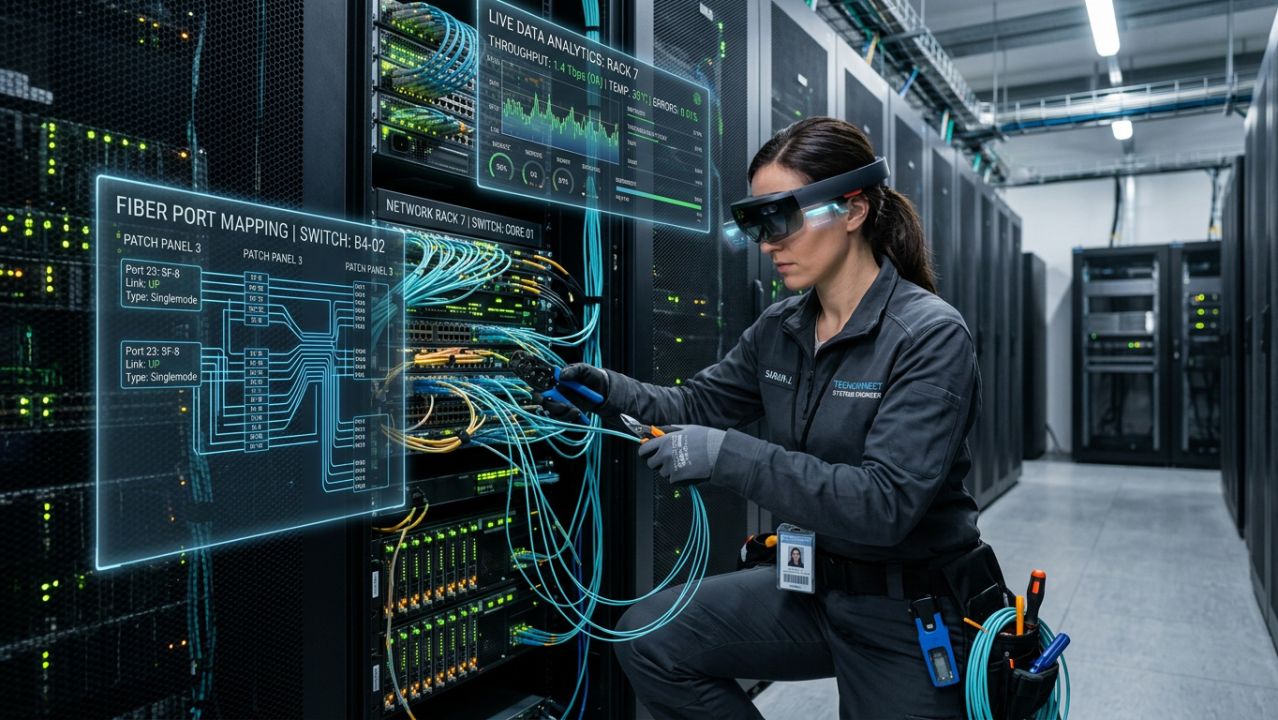 Author: Spark Team
How Augmented Reality Could Help Telecommunications Teams Simplify Complex Field Work
Telecommunications networks are built on complex infrastructure, distributed teams and time-sensitive service delivery. Field engineers often need to install, inspect, maintain or troubleshoot equipment while working across multiple sites and technical environments. Augmented reality can support this by placing guidance, equipment information and remote expertise directly into the engineer’s view.
READ FULL ARTICLE© 2026 All Rights Reserved | Company Reg No. 05327622 | Spark Emerging Technologies Limited