 Home
Home Software
 AR/Apps
 VR/Meta
 VR SOP
 AI
AI CGI
CGI Partners
 Industries
 About
About Blog
Blog Contact
How Augmented Reality Could Help Telecommunications Teams Simplify Complex Field Work
Relevant case studies






 Author: Spark Team
How Augmented Reality Could Help Telecommunications Teams Simplify Complex Field Work
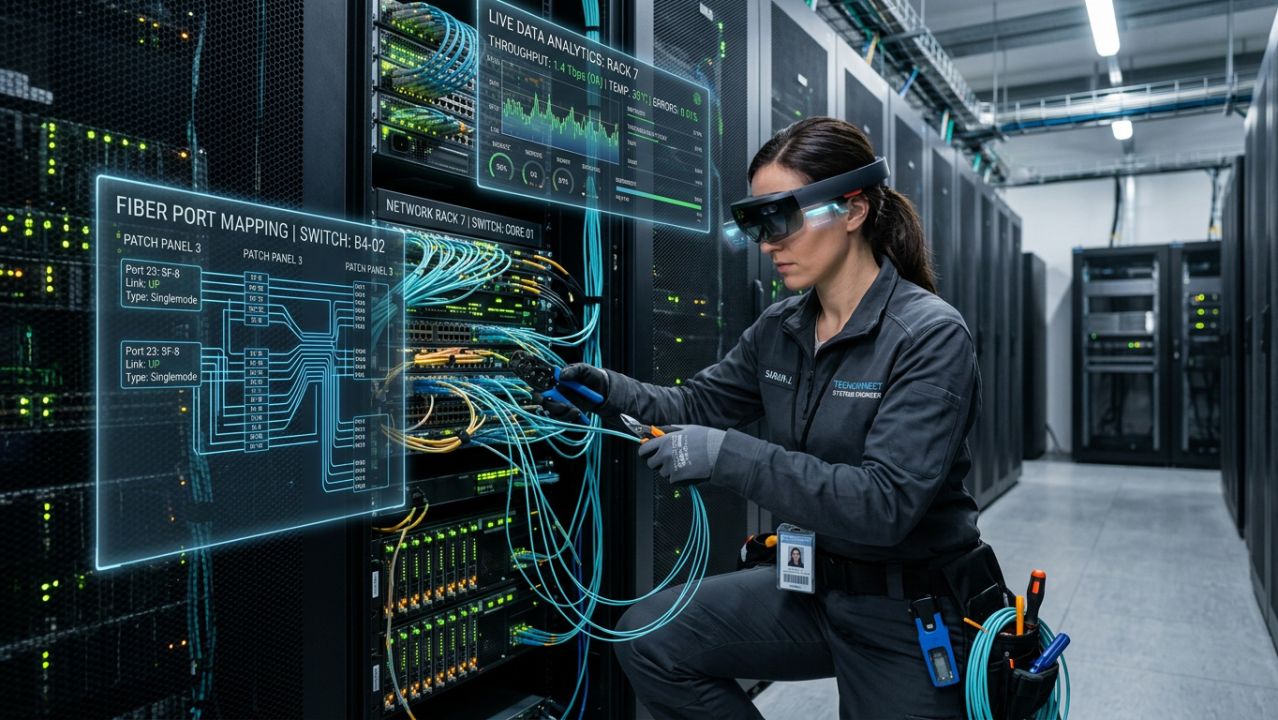
Telecommunications networks are built on complex infrastructure, distributed teams and time-sensitive service delivery. Field engineers often need to install, inspect, maintain or troubleshoot equipment while working across multiple sites and technical environments. Augmented reality can support this by placing guidance, equipment information and remote expertise directly into the engineer’s view.
Field-service AR materials continue to highlight the value of giving technicians quick access to information about complicated equipment through phones, tablets or smart glasses. AR training and support tools are also being positioned as a way to connect field teams with content and expertise across locations, even where direct access to specialist support may be limited.
Why Telecommunications Needs More Guided Field Support
Telecoms field work can involve cabinets, fibre routes, customer-premises equipment, towers, exchanges, network hardware and safety procedures. Even experienced engineers may need to check documentation, confirm configurations or escalate to specialists. AR can reduce the friction by making guidance visual and contextual.
Although many AR field-service examples are broader than telecoms alone, the same operational logic applies strongly to telecommunications. If technicians can access the right steps, diagrams or remote support while staying focused on the equipment, the potential benefits include faster learning, more consistent service and fewer avoidable errors.
Where AR can add value in telecommunications
Field-engineer onboarding and refresher training
Cabinet, router and network-hardware guidance
Customer-premises installation support
Remote expert assistance during fault diagnosis
Safety prompts for site access and equipment handling
Visual documentation for service and maintenance records
From Technical Documentation to On-Site Guidance
The biggest advantage of AR in telecommunications is that it can move information into the place where work happens. Instead of switching between a manual, phone call and live equipment, an engineer could see annotated instructions and equipment labels while carrying out the task.
Recognise the asset: The engineer scans or identifies the equipment, cabinet or component.
Load the workflow: AR presents the relevant installation, inspection or repair steps.
Access support: Remote experts or knowledge-base content can assist when needed.
Complete and record: The engineer finishes the task and captures evidence or notes for the service record.
Why This Matters Commercially
Telecommunications businesses benefit when field work is completed accurately, efficiently and with fewer repeat visits. AR can support these outcomes by improving technician confidence and reducing time spent searching for information. In a sector where customer experience is closely linked to service reliability and speed, better field support can have direct commercial value.
AR may also help with workforce development. New engineers can learn procedures visually, while experienced engineers can have their knowledge captured into repeatable workflows. That can make technical training more scalable across regions and teams.
What Comes Next for Telecoms AR
The next phase is likely to combine AR with AI diagnostics, digital twins of network infrastructure and service-management platforms. Instead of showing static steps, AR could surface likely fault causes, previous service history or configuration prompts based on the specific asset. This would make AR a more intelligent layer in telecoms operations.
Why Bespoke AR Matters in Telecommunications
Telecoms workflows vary by network type, equipment, geography, safety requirements and customer journey. A generic AR field-service tool will rarely reflect those details fully. Bespoke development allows the AR experience to be shaped around the exact assets, tasks and service pressures faced by the organisation.
At Spark Emerging Technologies, we create bespoke AR experiences for technical training, field support and operational communication. For telecoms clients, that could include engineer onboarding, guided installation tools, equipment visualisation, remote-support workflows or customer-facing setup experiences.
Conclusion
Augmented reality could help telecommunications teams simplify complex field work by making technical guidance more visual, contextual and accessible. By supporting engineers at the point of need, AR can improve training, consistency and service delivery. For telecoms organisations looking to modernise field operations, bespoke AR offers strong practical potential.
If your organisation is exploring AR for telecommunications, field service or technical training, contact Spark Emerging Technologies to discuss a bespoke solution.
© 2026 All Rights Reserved | Company Reg No. 05327622 | Spark Emerging Technologies Limited