 Home
Home Software
 AR/Apps
 VR/Meta
 VR SOP
 AI
AI CGI
CGI Partners
 Industries
 About
About Blog
Blog Contact
How Virtual Reality Is Helping Manufacturing Improve Training, Maintenance and Shop floor Readiness
Relevant case studies




 Author: Spark Team
How Virtual Reality Is Helping Manufacturing Improve Training, Maintenance and Shop floor Readiness
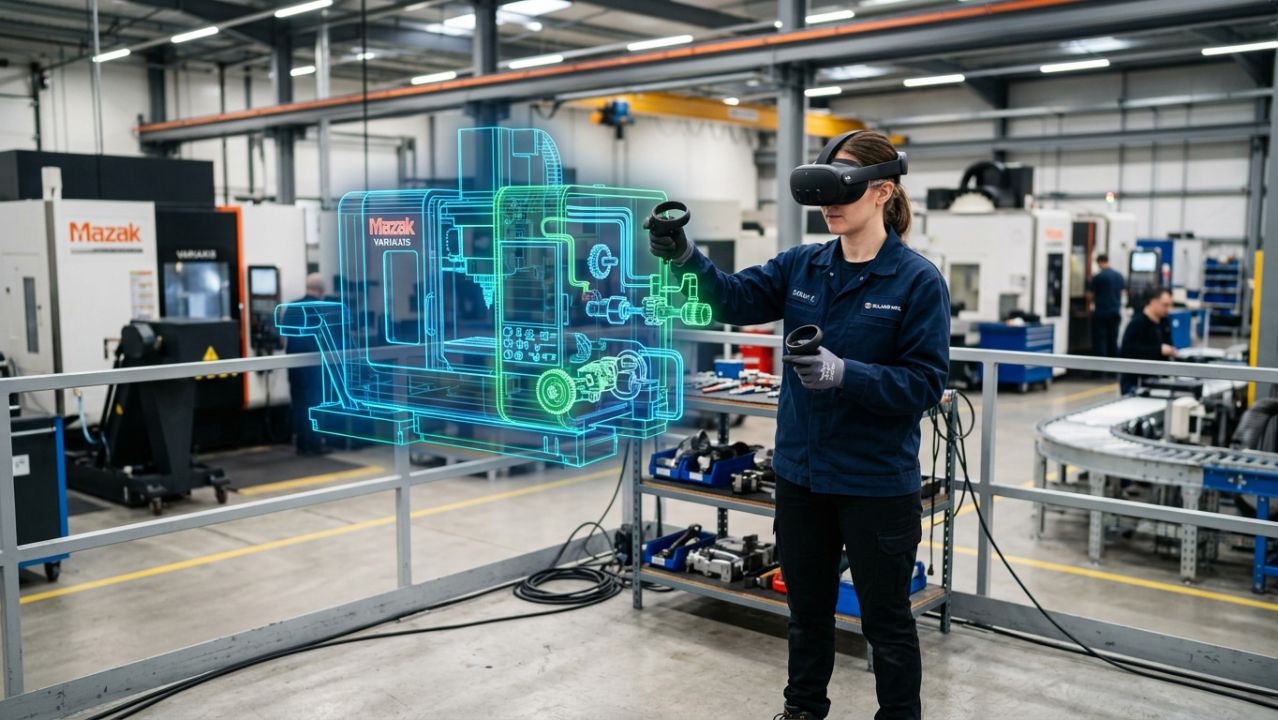
Manufacturing is one of the clearest business cases for virtual reality because it combines physical processes, technical complexity and constant pressure on speed, safety and consistency. VR gives manufacturers immersive ways to train operators, rehearse tasks and understand systems before live execution. Reuters reported this month that ABB is working with Nvidia to improve industrial robot training by making virtual simulations more realistic, while Deloitte’s digital-shop floor work highlights immersive VR and AR operator training as a useful tool for workforce upskilling.
For manufacturers, that matters because downtime, rework and slow onboarding are expensive. VR can help reduce those pressures by making learning more practical and more repeatable. Market analysis published this month also identifies virtual training and simulation as a major trend in AR and VR for manufacturing.
Why VR Fits Manufacturing So Well
Manufacturing environments often require people to understand machinery, processes and safety requirements quickly. Traditional training methods do not always capture the pace or context of real operations. Deloitte’s shop floor-excellence material specifically describes immersive VR and AR operator training as a way to accelerate skill development and prepare employees for increasingly digitalised manufacturing environments.
Where VR can add value in manufacturing
Operator onboarding and refresher training
Maintenance and repair rehearsal
Safety and compliance simulation
Process and changeover familiarisation
Digital twin and layout visualisation
Technical knowledge transfer across teams
From Instructions to Immersive Rehearsal
One of VR’s greatest strengths in manufacturing is that it allows people to practise before they act. Operators can experience workflows, understand machine relationships and build confidence without using live production time for every step. The new ABB and Nvidia partnership illustrates how seriously industry is now taking realistic simulation, with the aim of reducing setup time and improving real-world performance.
Enter the process: Learners step into a realistic production or maintenance scenario.
Practise safely: Tasks can be repeated without disrupting the live line.
Spot issues earlier: Understanding improves before physical deployment.
Scale more consistently: Training can be delivered across teams and sites.
Why It Matters Commercially
Manufacturers are under pressure to boost productivity while dealing with skills gaps and digital transformation. Deloitte’s 2025 smart-manufacturing survey highlights talent acquisition and operational risk as major concerns, which makes immersive training especially relevant. When skills can be developed faster and more consistently, the commercial case for VR becomes much easier to justify.
What Comes Next
The next phase of VR in manufacturing is likely to involve deeper integration with digital twins, AI-powered simulation and connected operational data. Deloitte’s March 2026 announcement on physical AI solutions built with NVIDIA Omniverse explicitly links immersive simulations, digital twins, VR and AI as part of industrial transformation.
Why Bespoke VR Matters in Manufacturing
A packaging line, a robotics cell and a plant-maintenance workflow all need different environments, interactions and task logic. That is why bespoke development matters. The best manufacturing VR solutions are built around the actual machine, actual process and actual training outcome the business wants to improve.
At Spark Emerging Technologies, we create bespoke VR experiences tailored to real manufacturing needs. That could include immersive operator training, maintenance rehearsal, safety simulation or digital twin-style visualisation designed around specific equipment and workflows.
Conclusion
Virtual reality is helping manufacturing make training more practical, more scalable and more closely aligned to real performance. By allowing teams to rehearse in immersive environments before live execution, VR can improve confidence, consistency and readiness across the shop floor. For manufacturers looking to modernise training and reduce friction, bespoke VR offers strong value.
If your organisation is exploring VR for manufacturing, operator training or maintenance simulation, contact Spark Emerging Technologies to discuss a bespoke solution.
© 2026 All Rights Reserved | Company Reg No. 05327622 | Spark Emerging Technologies Limited