 Home
Home Software
 AR/Apps
 VR/Meta
 VR SOP
 AI
AI CGI
CGI Partners
 Industries
 About
About Blog
Blog Contact
Community Health Training in VR: Revolutionising Health Education and Engagement
Relevant case studies





 Author: Spark Team
Community Health Training in VR: Revolutionising Health Education and Engagement
Introduction to Community Health Training in VR
As public health challenges grow, the need for effective community health education and training becomes increasingly important. Virtual Reality (VR) offers an innovative solution that allows healthcare professionals, community workers, and residents to engage in immersive training experiences. Spark Emerging Technologies harnesses VR technology to create interactive training modules that empower communities with knowledge and skills to improve public health outcomes.
Benefits of Community Health Training in VR
Implementing VR for community health training provides numerous advantages that enhance learning and engagement:
Immersive Learning Experience: VR allows participants to engage in realistic scenarios, making health concepts more relatable and easier to understand.
Safe Environment for Practice: Users can practice skills in a risk-free virtual environment, which is particularly important for sensitive health topics.
Enhanced Retention of Knowledge: The interactive nature of VR fosters better retention of information, as learners can visualise and experience health concepts in an engaging manner.
Real-Time Feedback: VR training can provide immediate feedback on performance, enabling participants to identify areas for improvement and adjust their approaches.
Accessibility for Diverse Audiences: VR can make community health education more accessible, accommodating different learning styles and enabling remote learning opportunities.
Real-World Applications of Community Health Training in VR
Public Health Education: VR can simulate community health scenarios, such as disease outbreaks or health promotion campaigns, allowing participants to practice responses and learn effective strategies.
Emergency Response Training: Healthcare professionals can use VR to train for emergency situations, such as natural disasters or public health crises, enhancing their readiness and coordination.
Health Behaviour Change Programs: VR can engage community members in learning about healthy lifestyle choices, providing immersive experiences that encourage behaviour change.
Cultural Competency Training: VR can help healthcare workers understand diverse communities better by immersing them in different cultural contexts and health beliefs.
Youth Health Education: VR can be used in schools to teach students about health topics such as nutrition, mental health, and sexual health in an interactive and engaging way.
How Spark Emerging Technologies is Leading VR Solutions for Community Health Training
At Spark Emerging Technologies, we specialise in developing VR solutions that enhance community health training and education. Our immersive VR experiences provide users with realistic scenarios that promote learning and engagement, allowing them to explore complex health topics effectively. By collaborating with health organisations and educational institutions, we create tailored VR applications that address specific community health training needs.
Addressing Key Challenges with VR in Community Health Training
User-Friendly Interfaces: Our VR applications feature intuitive designs, ensuring that users can easily navigate and engage with the training content.
Integration with Existing Health Programs: We work closely with health educators to ensure that our VR solutions align with existing community health programs and learning objectives.
Data Privacy and Security: Protecting sensitive health information is crucial; we implement robust security measures to safeguard data collected during VR training sessions.
Scalability Across Community Settings: Our VR solutions are adaptable and scalable, allowing deployment in various community health settings, from schools to community centres.
Case Study: VR for Public Health Training
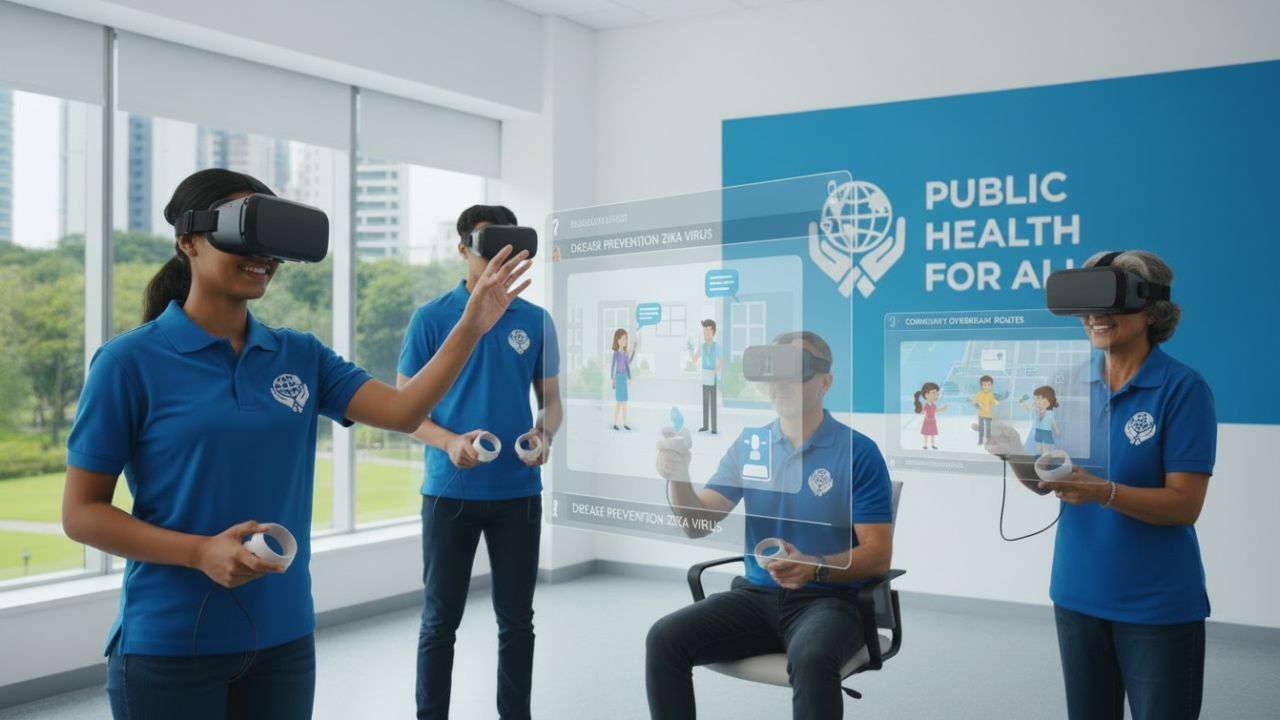
A public health organisation partnered with Spark Emerging Technologies to implement VR training modules for community health workers. The VR platform allowed workers to engage in scenarios related to disease prevention, community outreach, and health education. This initiative resulted in a 45% increase in participant engagement and significantly improved the effectiveness of health promotion activities in the community.
The Role of VR in Advancing Community Health Education
Community health training in VR is transforming how health education is delivered. By providing immersive, interactive experiences, VR enhances understanding, retention, and practical application of health concepts. This innovative approach not only streamlines health education but also fosters a culture of proactive health management within communities.
Future of Community Health Training in VR
As VR technology continues to evolve, the potential for community health training applications will expand significantly. Spark Emerging Technologies is dedicated to enhancing our VR solutions, anticipating more sophisticated applications that empower communities to improve health outcomes. The future promises increasingly interactive and insightful VR experiences that will play a critical role in public health education and engagement.
Conclusion
Community health training in VR offers innovative solutions for enhancing health education and engagement. Spark Emerging Technologies provides cutting-edge VR applications that enable healthcare professionals and community members to learn, practice, and engage effectively, fostering better public health outcomes. Discover how our VR solutions can transform your community health training programs—contact Spark Emerging Technologies for a demo today.
Contact Us:
Interested in optimising your community health training with VR? Contact Spark Emerging Technologies to schedule a consultation and learn how our solutions can benefit your organisation.
© 2026 All Rights Reserved | Company Reg No. 05327622 | Spark Emerging Technologies Limited